Purpose and The Crooked Path
Updated: Dec 17, 2024
And He Said, "Someday I Hope You Get The Chance To Live Like You Were Dying" - Live Like Your Were Dying - Tim McGraw
There is probably nothing more daunting than the thought of leaving the familiar and moving towards the unfamiliar. Leaving what seems good, okay, or good enough towards something that is unknown, but has the potential of being better. Leaving a situation that is toxic, unfulfilling, or passive, but at the same time comfortable, and stepping towards your authentic self.
What you don’t realize is that the moment you start having these thoughts, you have already made your decision. Your task now becomes coming to terms with that decision. Becoming comfortable with it. You have the desire, even if it is just a spark. Call it just curiosity at this stage. Now it is a matter of adding fuel to that spark and fanning the flames. Giving it oxygen. Imagining, processing, rationalizing, and dreaming about possibilities. You may not know what you want, but you know what you don’t want. You know what you are unsettled or unhappy with. And as you are dreaming, there is something within you that has awakened. And the task is finding your courage to take that step.
In your comfort zone, those walls, both real and imaginary, that you built to keep you safe.

are now holding you back. Those futile notions that you have that do nothing but prevent you from connecting with what is yours, and tell you that you can’t do it, are not worthy, and shouldn’t try in case you get hurt or fail, are not serving you. But at the same time, something inside of you is urging you to chip away at these ideas that you have.
Don’t live in the future. Live in the present. What is one thing... One small thing, that will at least keep the flame burning ever so slightly, and not snuff it out? It is time to move forward, even in the most cautious way. And then you keep going and growing. You find you are not buried. You are planted. There is a lot of growth that takes place underground before a seedling bursts through the surface. It has been a long cold winter season of your life, and you are slowly defrosting. Your comfort zone is no longer your cage. It is your laboratory, as you hypothesize, experiment, and prepare to break free. Ultimately, it is your launch pad to freedom and a world that was once unimagined.
The chains have been released. You are now free. Free of your comfort zone. Not everything you lose is a loss. Your freedom is a gain. Your freedom is your chance. Detachment from those things in your comfort zone is a breakthrough. A miracle. They said you couldn’t do it. You thought you couldn’t do it. They said you wouldn’t do it, and here you are. Freedom is clarity. A whole new world full of possibilities. Clarity that was once blurred by blockages and those things that held you back. Freedom is an answer to a silent prayer. Freedom is healing. Freedom is a transformation. Freedom is your destiny. Your freedom was meant to be. Breaking outside of your comfort zone was a life redirection that you didn’t even know that you needed, but inside you were asking for it all along.
And out in the Anxiety Zone, as you embrace your freedom, you face your fears. With

freedom comes responsibility, and you are taking responsibility for your path. You own your path. You are moving forward, making a difference, shining brightly, and living life with joy and abundance. You are learning and growing. Building new habits. Facing new challenges. Experiencing new opportunities. All those things that happen in the Development Zone. Everything is good. Right? Everything is coming together. Really? The question I have for you is... How do you know? And what is next? I asked this question before, and I ask it again... Do you know where you are going to?
Yes, I know, you are moving. You are moving forward. But what direction is forward? And yes, I also know that forward is not backward, sideways, or standing still. And you may in fact be moving forward, but moving forward towards what?
You may be busy, but it is easy to get caught up in the busyness of life. Getting caught up in a maze of activity that ultimately is resulting in empty victories. You have your freedom, you have got the promotion, you have new relationships, you have got the car, and you have more independence than you have ever experienced. But at some point, there will come a moment when you have a chance to reflect, and you may realize that despite all the things that you have been accomplishing and how far you have come, you are feeling a hollowness inside. It isn’t supposed to feel this way.
It is easy to dedicate yourself and work ever so hard and climb what you feel is the ladder of success, only to discover it is leaning against the wrong wall. You can be very busy and have put in a lot of work and effort, and still get off course, get stuck, and face unexpected obstacles and setbacks.
So often people find that their achievements have come at the expense of things that were very important to them. Things that were valuable. If not careful, we blind ourselves along the way to achieving our goals. We lose sight of the things that matter to us most. And now these things are damaged, maybe beyond repair. These things may be gone out of our lives and are now irretrievable.
What we really need as we move forward on our paths is to be certain of what is important to

us, and ingrain that into our mindset, and frame of reference. And with that as our lens, manage our activities each day to do what matters most. Imagine how you would feel if you did this, and the positive effect it would have on your path. If your ladder is not leaning against the right wall, every rung that you climb is just taking you to the wrong place. You might be quite busy but that just takes you to the wrong place even faster.
So many people feel a sense of disconnect. Feeling disconnected may have been the incentive that got you to break out of your comfort zone in the first place. But here we are supposedly having progressed, and still feeling disconnected.
There are so many ways for people to connect these days instantly and constantly. Smartphones, texting, instant messaging, video conferencing, facetiming, social media, and emailing (is it me, or is emailing seeming almost archaic these days?), yet we live in a time where people have never been more disconnected. We have lost touch with each other. We have lost touch with ourselves. We have lost touch with our compassion for the human race. We have lost touch with the things that matter most. We live life without purpose.
I Used To Float, Now I Just Fall Down. I Used To Know, But I'm Not Sure Now. What I Was Made For. What Was I Made For? - What Was I Made For? - Billie Eilish
We may have started out feeling like we had purpose. Thinking that what we were doing or working towards was purposeful, but as we progressed things changed. What was once driving us has lost its steam. What we thought we wanted, it turns out, wasn’t what we thought it would be. It wasn't what we wanted after all. Not only are we disconnected. We are disillusioned.
All manner of questions may come up in your mind. Was I wrong all along? What do I want? Who am I? How do I get motivated again? How do I get that connection and how do I trust it? Where am I really going? Your foundation has been shaken.
In times like these, it is beneficial to refer back to Viktor Frankl, the Austrian psychiatrist that
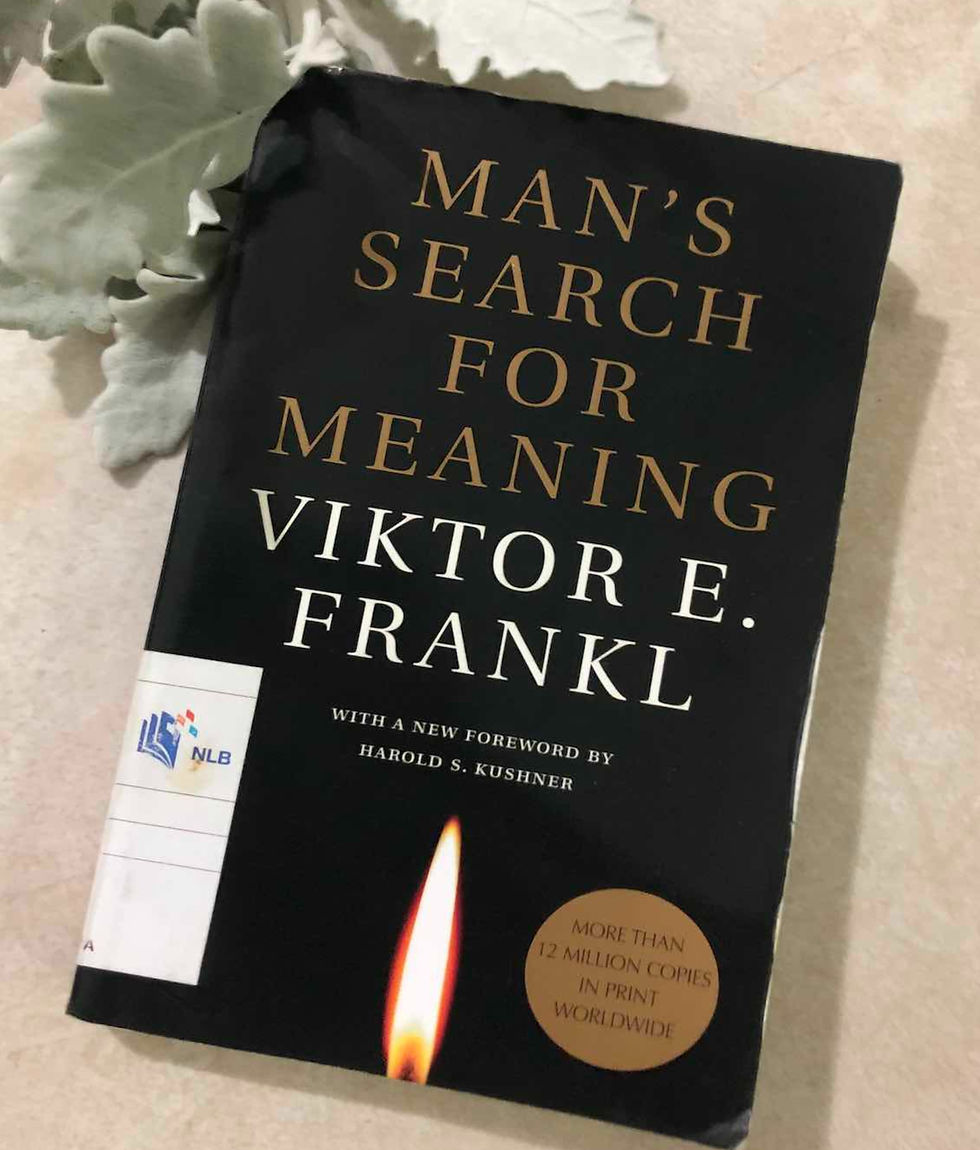
I wrote about earlier. Frankl wrote about his experiences as a prisoner at Nazi concentration camps, and in particular affirmed what he called humankind’s last and ultimate freedom. That in between Stimulus and Response is our freedom to choose our response to what is happening around us. Frankl would envision his life in the future, once he was free of the concentration camp. He thought about his work and his family, and that is how he survived. And he observed and concluded through his experience during his years as a captive, that individuals who were able to maintain a purpose in their lives were the ones most likely to survive. To quote Frankl, “Woe to him who saw no sense in his life, no aim, no purpose, and therefore, no point in carrying on. He was soon lost”.
If you don’t act on life, life has a way of acting on you. This is consistent with everything I have discussed so far. Taking responsibility for the change that you want in your life. Nobody is coming to save you. Owning your path. Making an impact and taking initiative. But how do you know if your ladder is leaning against the right wall? The path you are on may look like the right one until you come to a cliff where there is nowhere to go but down, or a dead end.
Ultimately, Your Purpose Determines Your Path
Your purpose determines whether the ladder you are climbing is leaning against the right wall. Your purpose determines whether the door that you are walking through is the one that is best for you. You do have a purpose. There is something for you to do. Something that is uniquely yours. You have an assignment. Somebody needs what you have to offer. Someone needs your gifts.
I have come to believe that the best indicator of success and happiness as you follow your path is to discover your purpose. And then live your life with your purpose in the forefront of your mind. You need to find your “why”. You must find your why, before you focus on the “hows” in your life. Without purpose, your hows will lead to shallow pursuits. As humans, we need a reason to live. A why. A purpose. Something that makes you excited to wake up and get out of bed each day. But how do you discover your purpose?
In her book, The Path, author Laurie Beth Jones relates a story that was told to her by her uncle. He said that in World War II, if an unidentified soldier appeared suddenly in the dark and could not state his mission, he would be automatically shot without question. Now, whether this story is accurate or not, I do not know. But it begs the question... What if your life or death was dependent on your mission in life?
So many of us don’t, and never will, get serious about our purpose in life until there is a tragedy, a life-changing event, a loss, a death, a near-death experience, a terminal illness, or some other situation that makes us come face to face with our own, or someone else’s mortality. And for some it is for a fleeting moment, and then it is gone.
He Said, "I Was In My Early Forties, With A Lot Of Life Before Me, When A Moment Came That Stopped Me On A Dime" - from Live Like You Were Dying - Tim McGraw
In his book, Further Along The Road Less Traveled, author M. Scott Peck says, “Death is not a taker-away but rather a giver of meaning”. He says if you are suffering with a sense of meaninglessness there is nothing better that you can do than strike up a serious relationship with the end of your existence. As you struggle with the mystery of your death, you will discover the meaning of your life.
But many people don’t want to do this. They are too busy living. Maybe they are too busy denying. The thought of dying is too depressing. But by excluding it from your awareness, you are limiting your consciousness. Face it. We are all going to die at some point.
Theologian and humanitarian, Albert Schweitzer wrote -
“We must all become familiar with the thought of death if we want to grow into really good people. We need not think of it every day or every hour. But when the path of life leads us to some vantage point where the scene around us fades away and we contemplate the distant view right to the end, let us not close our eyes. Let us pause for a moment, look at the distant view, and then carry on. Thinking of death in this way produces love for life. When we are familiar with death, we accept each week, each day as a gift. Only if we are able to thus accept life, bit by bit, does it become more precious”
In his book, How Then Shall We Live?, author Wayne Muller states that there are four simple questions that have shaped the spiritual journeys of seekers for years. They call forth the very nature of who we are and how we live our brief time on earth. The questions are – Who Am I?, What Do I Love?, How Shall I Live, Knowing That I Will Die?, and What Is My Gift To the Family Of The Earth? These questions remain with us as we travel our paths.
Author Robin Sharma wrote a book entitled, Who Will Cry When You Die. He states, “When you were born, you cried while the world rejoiced. Live your life in such a way that when you die, the world cries while you rejoice”.
Finally, in Stephen Covey’s, “The 7 Habits of Highly Effective People”, the second habit after “Be Proactive”, is “Begin With The End in Mind”. That means to begin each day with the image of the end of your life as your frame of reference and the basis by which everything else is examined. Envisioning your own funeral, or celebration of life, and thinking about what you would like said about you. If you do this, it will give you an idea as to what some of your deeply held values are.
You may have heard the old axiom, that no one on their death bed ever wishes that they had

spent more time at the office. Regrets commonly expressed by people on their deathbeds often revolve around missed opportunities, unfulfilled potential, and relationships. These themes have been consistently noted by those who work closely with the dying, such as palliative care nurses and hospice workers.
Here are some of the most frequently cited regrets of those whose lives are nearing an end -
Working too hard: This is a common regret, particularly among men. Many express sorrow over missing out on important family events, relationships, and personal time because they prioritized their careers and work obligations over their personal lives.
Not expressing feelings: People often regret not sharing their true feelings with those they care about whether it was to maintain peace, avoid confrontation, or out of fear of rejection. They wish they had been more open and honest in their relationships.
Losing touch with friends: Many regret not maintaining connections with old friends. They realize the importance of these relationships and feel sad about not putting in the effort to keep in touch.
Not allowing oneself to be happier: Some people recognize that they had a tendency to stay in their comfort zones or let fear of change prevent them from seeking happiness. They regret not taking more risks or allowing themselves to experience joy.
Not spending enough time with loved ones: Regret about not spending enough quality time with family and loved ones is common. People often wish they had prioritized these relationships more and created lasting memories.
Not taking better care of one's health: Neglecting physical and mental health is a frequent regret. Many wish they had paid more attention to their well-being, including healthier lifestyle choices and managing stress better.
Letting fear dictate choices: Some people regret allowing fear to guide their decisions, whether in their personal lives or careers. They wish they had been braver in taking risks and seizing opportunities.
Not having the courage to live a life true to oneself: Many people regret not pursuing their dreams and aspirations, often because they were trying to meet others' expectations. They wish they had been more authentic and true to their own desires and values.
Not contributing to the world: Some people regret not making a positive impact or contributing more to society. They wish they had engaged in more meaningful or charitable activities that could have made a difference.
Not traveling more: The desire to see more of the world and experience different cultures often surfaces as a regret. People wish they had taken the time to travel and explore while they had the chance.
These regrets highlight the importance of living a life that aligns with one's true values and desires, prioritizing relationships, and being mindful of one's physical and emotional well-being.
The Two Most Important Days of Your Life Are The Day That You Were Born, and The Day That You Found Out Why - Mark Twain
Imagine how different our lives would be if we truly knew what mattered most to us and through that lens, we managed ourselves in a way consistent with those things. If you defined these things in your life, that would give you your own personal definition of success. You might surprise yourself if you seriously did this exercise. What you thought you wanted, or what you have been striving for, may not even be on the list. When you give serious thought to your own mortality, that shifts your thinking.
It is really about having a plan for your path before walking it. Just like we write a draft of a

letter or email before sending it. We have an idea of what we want to say and can be certain that it is worded right. Creating a blueprint for your home before building it. We know what steps to follow to get us the home of our dreams before we place a shovel in the ground or hammer the first nail. Or having a business plan before launching a new venture. This helps us bring our vision to life. Similarly, when we have an idea of what really matters in our lives, that guides us with each step we take along our paths before we take that step.
We create in our minds, and then we implement. We envision, and then we move forward. These actions are within our Aura of Impact. These are things we have control over. But when we don’t do this, we allow other people, events, and conditions to act on us and shape our lives. We react. We let ourselves be controlled by other people, outside pressures, our upbringing, and our history, and our Aura of Impact shrinks.
But we are not a product of the vision of who other people say we are. We are a product of our own vision. And we have the ability to take initiative to create that vision and implement it.
I Asked Him, "When It Sank In That This Might Really Be The Real End, How's It Hit You When You Get That Kind of News? Man. What'd You Do?" - from Live Like You Were Dying - Tim McGraw
Living your life with purpose is significant and important for many reasons -
Enhanced Well-being and Happiness: Having a clear sense of purpose is closely linked to greater overall well-being and happiness. When individuals know what they are striving for, they often feel more fulfilled and satisfied with their lives. Purpose gives meaning to everyday actions, making them feel more significant and rewarding.
Motivation and Resilience: A strong sense of purpose provides motivation to pursue goals and overcome obstacles. It helps individuals stay focused and committed, even when faced with challenges. Resilience is bolstered by purpose, as people are more likely to persevere when they believe their efforts have meaning.
Improved Mental and Physical Health: Studies have shown that having a sense of purpose can lead to better mental health, reducing the risk of depression and anxiety. It is also associated with physical health benefits, including lower risk of chronic diseases and longer life expectancy. The sense of direction and coherence that purpose provides can alleviate stress and promote healthier lifestyles.
Stronger Relationships: Purpose often involves goals and values that are larger than oneself, which can enhance social connections and relationships. Whether through family, friends, community service, or professional networks, having a purpose can lead to deeper, more meaningful relationships and a stronger sense of belonging.
Personal Growth and Self-Discovery: Living with purpose encourages continuous personal growth and self-discovery. It pushes individuals to explore their passions, strengths, and values, leading to greater self-awareness and a more authentic life. Purpose-driven individuals are more likely to engage in lifelong learning and self-improvement.
Contribution to Society: People with a clear sense of purpose often seek to contribute to society in meaningful ways. Whether through their careers, volunteer work, or personal projects, they are driven to make a positive impact on the world around them. This sense of contribution can lead to a more just, compassionate, and thriving society.
Clarity in Decision-Making: A purpose provides a framework for making decisions and setting priorities. When faced with choices, individuals can evaluate options based on how well they align with their overall purpose, leading to more consistent and coherent life paths. This clarity can reduce confusion and indecision, making life feel more manageable.
Living with purpose enriches life by providing direction, motivation, and meaning. It

enhances well-being, fosters resilience, and encourages positive contributions to society, leading to a more fulfilling and impactful existence. You are flourishing.
Consider what awaits beyond the Development Zone. The Flourishing Zone is where you are Finding Your Purpose, Living Your Dreams, Conquering Objectives, and in turn Setting New Goals.
Consider this for a moment. If you were out in the wilderness... Let’s say you were hiking, camping, or on a canoe trip, and you got off of the main trail and now you don’t know where you are. Or let's say you are on a jungle safari and the guide for your group, who is very familiar with the area deserts you (not a very reliable guide, I know). Or you were in a plane crash in the wilderness, and you are among the survivors, and you have no idea where civilization is. Which would you rather have? A map of the surrounding area or a compass?
A map may provide some detailed information about the area. Information about the terrain, landmarks, rivers and trails. It gives you a visual representation of the area, but you are in the middle of nowhere. A map does you no good if you look around and everything looks the same, and you cannot pinpoint where you are on the map. You need a point of reference. You need to be able to orient the map to what you are seeing around you, and where you are. Also, maps are open to interpretation. One person may read it entirely differently than someone else. Also, maps can be drawn up differently depending on whoever created it. They may not be totally accurate. Maps can be outdated. You can question the accuracy of and the legitimacy of a map. Maps are not always correct.
A compass, on the other hand, will always point to True North. You can always rely on that. Of course, having both a compass and a map would be ideal, as the compass will help you get oriented as you use the map as a guide. But if you can only have one, given everything, the wise choice is to have a compass as it always points in the right direction. You know in what direction you are headed. It always points to True North.
What is your True North? You have an internal compass, and it will point you to your True
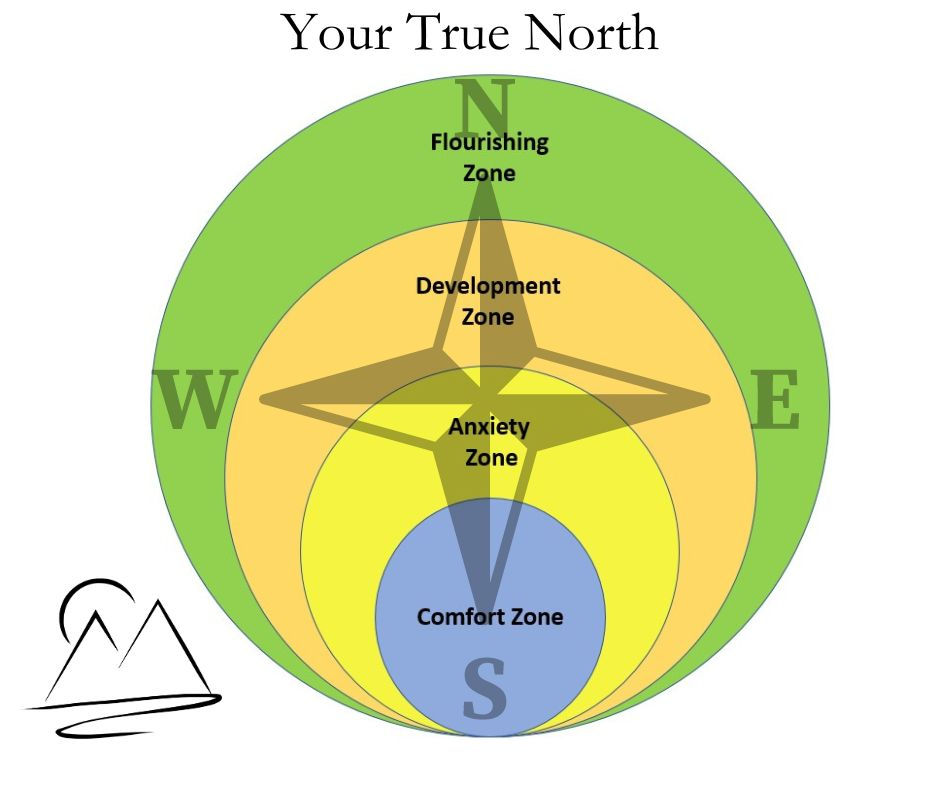
North, which is where you will find your purpose, values, and authenticity. Your True North is your set of principles or your sense of direction that keeps you aligned with your deepest beliefs and your true self, regardless of what obstacles and influences you encounter on your path. True North is the guiding force that helps you navigate your path with integrity and purpose. Staying true to who you are and what you stand for. Your True North points to your Flourishing Zone.
You are being called to step into your personal power and align with your True North. Remove all limiting thought patterns and negative beliefs. You are far more powerful than you realize. Your true power is emerging. But what is your True North?
Finding your True North is the highest leverage task you can accomplish to move forward...
On The Crooked Path
Check Your CPS (Crooked Path System) - From time to time, I will include an activity that compliments the content of my blog. My intention is to help make what I write more meaningful to you, and help you relate to your own personal journey.
Just as we have become accustomed to checking our GPS to keep us on track, see where we have been, and consider the path forward, I encourage you to check your CPS. It will help you Make That Change.


Comments